

With winter on the horizon, commercial property owners and facility managers face a crucial window of time to prepare their buildings for harsh seasonal conditions. At RoofConnect, we’ve seen firsthand how small roofing issues in the fall can turn into costly emergencies after the first snowfall. Identifying early warning signs now can protect your investment, maintain business continuity, and prevent avoidable damage.
Here are three notable signs your commercial roof needs attention before winter hits and how ignoring them can come back to haunt your facility once snow and ice arrive.
1. Ponding Water or Slow-Draining Areas
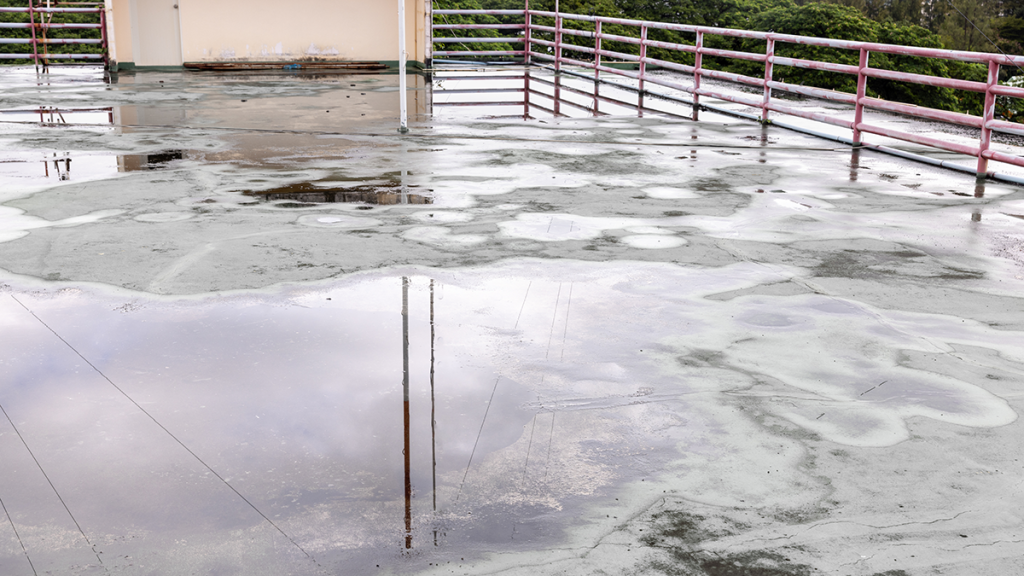
Even after moderate rain, water should not sit on your commercial roof for more than 24 to 48 hours. Ponding water is often the first indication that drainage systems aren’t functioning properly, or the roof has developed low spots.
Why it matters before winter
If this issue isn’t addressed promptly, standing water can:
- Add unnecessary weight to the roof deck
- Accelerate membrane deterioration
- Increase the risk of insulation saturation
What happens after snow arrives
When snow accumulates over areas that already hold water:
- The weight load on the roof multiplies dramatically
- Ice dams begin to form, pushing meltwater under seams
- Structural strain becomes a real threat, especially during freeze–thaw cycles
Ignoring ponding now can lead to leaks, safety hazards, or even partial collapses once the roof is burdened with snow and ice.
2. Visible Membrane Damage or Open Seams
Signs of age or wear, such as cracks, blisters, punctures, or open seams, may seem minor during warmer months but become much more serious heading into winter.
Why it matters before winter
Damaged membrane areas allow water to enter the roofing system, saturating insulation and weakening roof performance.
What happens after snow arrives
When temperatures drop:
- Water trapped beneath membranes freezes and expands
- Seams can tear open further and blisters can become larger and more fragile
- Leaks multiply as melting snow finds every vulnerable point
These issues often remain hidden until interior damage becomes visible, meaning the problem has already escalated and repairs become more costly and complex.
3. Damaged Flashing or Loose Perimeter Materials
Flashing and perimeter edge metal help protect some of the most vulnerable parts of a roof like transitions, edges, walls, curbs, and penetrations.
Why it matters before winter
Loose or deteriorated flashing allows wind-driven rain to enter the roof system and weakens the roof’s defense against weather events.
What happens after snow arrives
Snow and ice tend to accumulate around flashing and edges. When freeze–thaw cycles begin:
- Ice pushes flashing further out of place
- Gaps widen, allowing meltwater to enter
- Wind uplift becomes a major risk, especially during winter storms
What starts as a loose edge or small gap can develop into a major failure at the roof perimeter, and while the roof perimeter is a small percentage of the overall roof, most roof failures are due to an inadequate perimeter. A small repair now can prevent a catastrophic failure.
Why Addressing These Issues Now Matters
Commercial roofs rarely fail overnight. Problems build quietly over time, especially when harsh winter weather accelerates deterioration. By addressing these signs early, you can:
- Prevent emergency leaks during snowstorms
- Avoid business interruptions
- Extend the life of your roofing system
- Protect your people, assets, and operations
At RoofConnect, we specialize in helping facility leaders prepare their roofs for winter with comprehensive inspections, nationwide service capabilities, and rapid response teams.
Schedule a Pre-Winter Roof Assessment
If you’ve noticed any of these warning signs or simply want peace of mind before the cold weather hits, the clock is ticking, and now is the ideal time to schedule a professional inspection.
RoofConnect is here to help protect your investment before winter makes small issues much bigger. Contact us today to ensure your roof is ready to withstand the complication of winter weather!
📞 1-877-942-5613
📧 [email protected]
